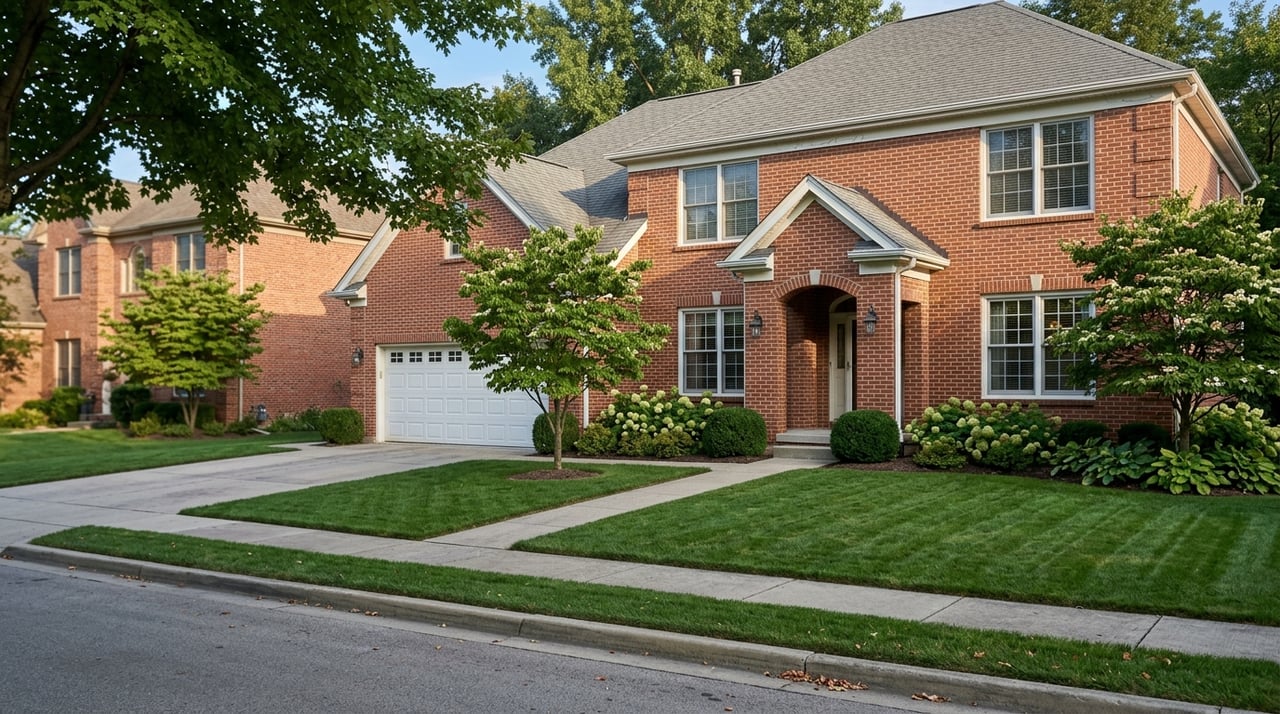
If you’re moving up in New Albany, choosing the right neighborhood can matter just as much as choosing the right house. One street may put you close to Market Square and trails, while another offers larger lots, golf views, or a newer phase with less wear and tear. The good news is that New Albany gives you real variety within a highly planned community, and understanding those differences can help you buy with more confidence. Let’s dive in.
Why New Albany Feels Different
New Albany is not just one subdivision with similar homes repeated block after block. It is a master-planned community made up of distinct neighborhood pockets, each with its own layout, housing style, and daily lifestyle feel. According to the New Albany Company residential overview, the community is structured around Georgian architecture, a pedestrian-friendly town center, parks, trails, and a central school campus.
For move-up buyers, that structure matters. As your budget and priorities grow, you are often comparing more than square footage. You are also weighing walkability, lot size, privacy, maintenance, commute patterns, and how the neighborhood may feel five or ten years from now.
What Move-Up Buyers Should Compare
Before you narrow in on one part of New Albany, it helps to define what “move-up” means for your household. For some buyers, it means a bigger single-family home near community amenities. For others, it means a more private lot, a lower-maintenance setup, or a long-term home with room to grow.
A smart comparison usually includes:
- Proximity to Market Square, parks, and trails
- Lot size and spacing between homes
- Home age and level of neighborhood maturity
- Maintenance needs and HOA structure
- Garage, parking, and driveway function
- Nearby construction or future development
- Commute access for work, school, and errands
New Albany’s appeal is strongly tied to outdoor connectivity. The city highlights more than 80 miles of leisure trails and over 2,000 acres of open space, which means many buyers will want to think carefully about how often they will actually use those features and which pocket gives them the easiest access.
Walkable Areas Near Town Center
If your ideal move-up home keeps you close to everyday destinations, the village-center pockets deserve a hard look. The Town Center Living overview describes housing options near Market Square, Rose Run Park, the library, arts and cultural amenities, and the K-12 campus.
This part of New Albany can work especially well if you value convenience and an active routine over maximum lot size. You may be able to walk or bike to more of your weekly stops, which can change how a neighborhood feels in day-to-day life.
Townhomes and Lower-Maintenance Options
Keswick is one example for buyers who want generous interior space with a more streamlined exterior footprint. The community includes 44 townhomes with about 2,750 to 3,200 square feet, offering a move-up option that may feel more manageable than a large lot with extensive yard work.
For some households, that tradeoff is ideal. You may gain location and lifestyle ease while giving up some yard space or separation from neighbors.
Single-Family Homes Near the Core
Ackerly Park and Upper Fenway are useful comparisons if you want a more traditional single-family setting while staying near the center of town. The New Albany Company notes that Ackerly Park emphasizes green spaces and walkability, while Upper Fenway offers homes averaging about 3,500 square feet on sizeable lots with tree-lined streets, walking trails, shared green space, and a children’s park.
If you are balancing house size with location, these neighborhoods may hit a sweet spot. They often appeal to buyers who want more room without feeling removed from the community core.
Country Club and Golf Pockets
If you picture your next home with golf views, landscaped entrances, and a more established luxury feel, New Albany’s country-club areas may stand out. The Country Club Living page describes neighborhoods anchored by the New Albany Country Club and its 27-hole Jack Nicklaus-designed golf course.
These neighborhoods are not all the same, though. Some offer original homes with mature surroundings, while others provide newer lot opportunities inside the broader country-club setting.
Established Golf-Adjacent Neighborhoods
The Crescent is the original New Albany Country Club neighborhood and includes about 150 homes across The Crescent, Wiveliscombe, and Upper Clivdon. Many homes face or back to the course and nearby trails, which can be a major draw for buyers who value views and open surroundings.
Lansdowne offers a different kind of move-up option. It is a 100-home zero-lot-line neighborhood with courtyards and rear-loading garages, which may suit buyers who want a country-club setting with less exterior upkeep than a larger estate-style property.
Estate Feel Within the Club Area
Highgrove and Upper Brandon lean more toward buyers seeking space and a more elevated streetscape. Highgrove is a small 18-home-site pocket with lush boulevards, roundabouts, water features, and extended setbacks, while Upper Brandon includes an eight-acre pond, an expansive park, trails, and golf views.
It is also worth noting that this area is still changing. The same country-club resource notes new lots in Section 30 and Ebrington, which means buyers should ask where future construction may affect traffic patterns, views, and the pace of nearby development.
Suburban Pockets and Newer Build-Outs
Some move-up buyers want a neighborhood that feels more conventionally suburban, with a broader residential layout and a more familiar rhythm of single-family living. In that case, larger pockets and newer phased sections may be the better fit.
The Preserve is one example often cited for that kind of setting. A local neighborhood page describes it as nearly 500 homes with a common area, gazebo, park benches, and a small-town feel within a suburban environment.
For buyers who prefer newer construction or a less established section, New Albany’s project updates page shows active buildout in places like Woodhaven and ongoing phasing in Nottingham Trace, a 55-plus subdivision planned for up to 240 homes.
The key question here is usually not whether newer is better than mature. It is whether you want the finished feel of an established neighborhood or the updated home features and phased growth of a newer section.
Larger Lots and Estate Options
If your move-up goal centers on privacy, outdoor space, and a long-term hold, larger-lot neighborhoods deserve special attention. In New Albany, that often means looking closely at lot placement, setbacks, landscaping, and how the home sits in relation to roads, trails, and neighboring properties.
The clearest acreage-oriented example is The Farms, which New Albany Realty describes as a gated estate-home community where homes often range from 5,000 to 10,000 square feet. Even if you are not shopping at that size, this category highlights an important point for all move-up buyers: the land can be just as important as the house.
When you tour these homes, pay attention to more than the backyard. Look at tree coverage, traffic exposure, usable outdoor area, and how much privacy you actually gain from the lot design.
Think Beyond the Home Itself
New Albany is convenient in broad terms, but convenience looks different depending on your weekly routine. The location overview says New Albany is about 15 minutes from downtown Columbus, 10 minutes from John Glenn International Airport, 7 minutes from Easton, and 5 minutes from I-270, with State Route 161 providing access through five interchanges.
That means your best neighborhood may depend on the details of your day. If you commute often, travel regularly, or want easier errand runs, one pocket may save time every week even if another has a slightly larger home or lot.
Market Square also plays a major role in daily convenience. The New Albany Company describes it as the civic and retail heart of the community, within walking distance of the school campus and many residential areas. For many move-up buyers, that can become a deciding factor when comparing neighborhoods that otherwise seem similar on paper.
Watch Future Projects Carefully
One of the smartest things you can do in New Albany is ask what is changing nearby. The city notes that its master plan, first adopted in 1998, is designed to guide growth and preserve community character, and the city updates current projects monthly.
According to the City of New Albany project updates, current work includes the Market Street extension, Bevelhymer and Walnut roundabout and fieldhouse work, and Rose Run Park expansion. These improvements may bring long-term benefits, but they can also affect street feel, access routes, and nearby construction activity in the short term.
For a move-up purchase, that matters because you are often buying for a longer time horizon. A home that feels quiet today may sit near future lots, roadway changes, or construction traffic tomorrow.
Questions to Ask on Tours
When you tour New Albany neighborhoods, try to compare lifestyle fit instead of just price per square foot. Because the community includes walkable center pockets, golf-oriented areas, suburban sections, and estate settings, the right questions can quickly reveal which options fit your next chapter.
Use this checklist as you tour:
- How walkable is this neighborhood to Market Square, parks, or the trail system?
- Does the home back to a trail, pond, park, or golf area, and how might that affect privacy or activity nearby?
- Are there HOA rules or architectural guidelines that may shape exterior updates?
- What nearby phases or projects are still under construction?
- Is the neighborhood best suited for long-term living, lower maintenance, or more traditional single-family space?
- How do the driveway, garage setup, and guest parking work for your day-to-day needs?
These questions can help you compare homes more clearly, especially when multiple neighborhoods seem attractive for different reasons.
How to Narrow Your Best Fit
For most move-up buyers, the decision comes down to three priorities: lifestyle, layout, and long-term comfort. You may love the idea of village walkability, but still decide you need a larger lot and more separation. Or you may start by chasing square footage, then realize that easier access to trails, parks, and Market Square would improve daily life more.
A helpful way to narrow your list is to rank your top priorities before touring:
- Must-have location features
- Preferred home size and lot feel
- Maintenance tolerance
- Commute and errand needs
- Comfort with nearby development or future phases
When you approach New Albany this way, the search becomes more focused and less overwhelming. Instead of trying to find the “best” neighborhood overall, you can identify the pocket that best supports how you actually want to live.
If you want help comparing New Albany neighborhoods in a practical, low-pressure way, Dixie L Lundquist can help you sort through the tradeoffs, schedule smart tours, and find the right fit for your next move.
FAQs
What makes New Albany neighborhoods different for move-up buyers?
- New Albany includes distinct neighborhood pockets with different tradeoffs in walkability, lot size, maintenance, golf access, privacy, and proximity to Market Square and trails.
Which New Albany neighborhoods are closest to Market Square?
- Town Center Living areas, including pockets like Keswick, Ackerly Park, and Upper Fenway, are among the options positioned near Market Square, Rose Run Park, the library, and the K-12 campus.
Are there golf-course neighborhoods in New Albany?
- Yes. New Albany’s country-club areas include neighborhoods tied to the New Albany Country Club, such as The Crescent, Lansdowne, Highgrove, and Upper Brandon.
Are there newer construction options in New Albany?
- Yes. City project updates show active buildout in Woodhaven and ongoing phasing in Nottingham Trace, so buyers may find opportunities in newer sections as well as mature neighborhoods.
What should buyers ask when touring New Albany neighborhoods?
- Ask about walkability, trail or golf adjacency, privacy, HOA or architectural rules, parking and garage function, and any nearby projects or future phases that could affect daily life or resale appeal.
How convenient is New Albany for commuting and errands?
- According to the New Albany Company, the city is about 15 minutes from downtown Columbus, 10 minutes from John Glenn International Airport, 7 minutes from Easton, and 5 minutes from I-270, with quick access via State Route 161.