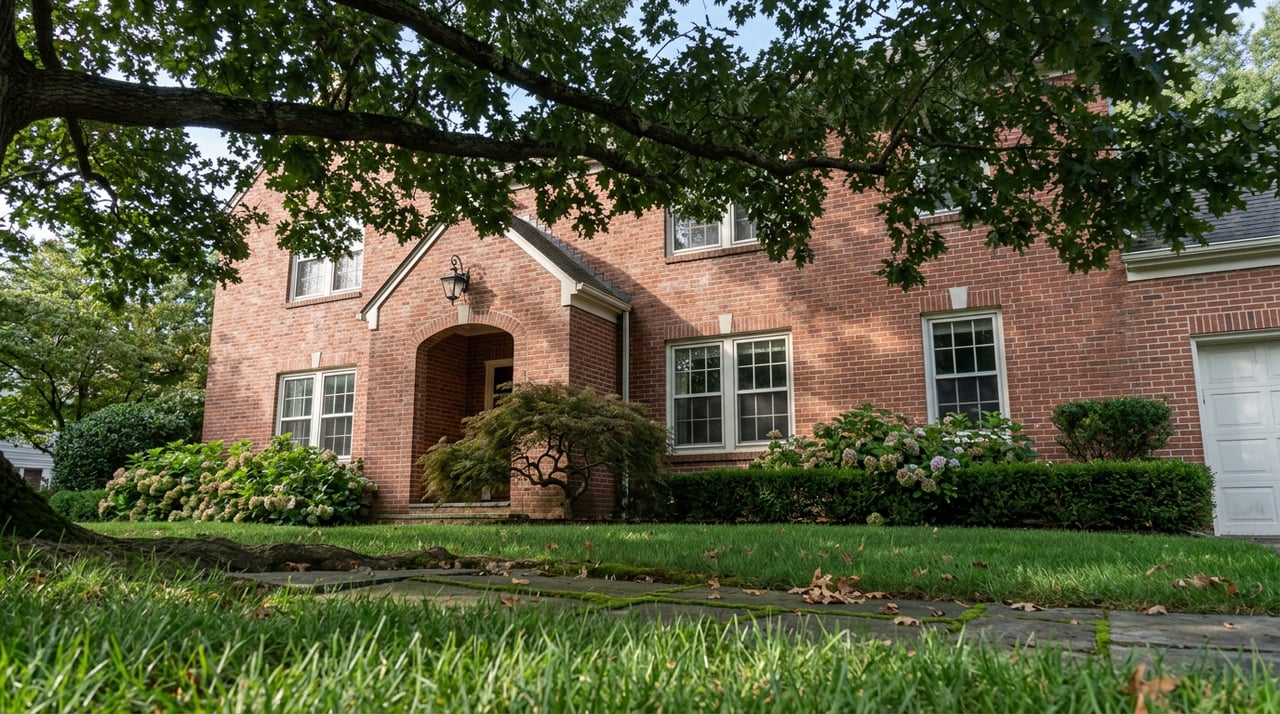
Walk down State Street past the brick storefronts, or cut through the Heritage District on a September evening, and Westerville does what it has always done. Mature oaks and sugar maples lean over the sidewalks, their canopies old enough to have shaded the same porches for a century. Otterbein University sits just blocks away, and the whole stretch still reads like the postcard version of a Midwestern college town.
None of that canopy shows up on a listing sheet, and neither does what it's doing underground. In Westerville's oldest blocks, the same trees that make a street worth walking are often growing straight into the clay tile, cast iron, or Orangeburg pipe that carries wastewater from the house to the street. Whether a seller or a buyer knows that before the purchase agreement is signed decides who ends up holding the leverage when it's finally found.
The Line the City Doesn't Own
Westerville's public sewer system got a real upgrade decades ago. City records show the city received a federal grant in 1977 to overhaul its wastewater collection system. That grant covered the mains, the pipes running under the streets that belong to the city.
It never touched the lateral. That's the shorter run of pipe connecting each house to the main, and it has always been the homeowner's property and the homeowner's repair bill, not the city's. That distinction is easy to miss because nothing about it shows up during a walkthrough. The lateral usually sits four to six feet underground, and it can look like nothing is wrong right up until it isn't.
Which Block You're On Matters More Than the Price
Not every Westerville street carries the same risk, and the dividing line isn't the listing price. It's the decade the house went in the ground and what material the plumber had on hand that year.
| Westerville Area | Typical Construction Era | Common Lateral Material | What It Means for a Sale |
|---|---|---|---|
| Uptown Westerville, Heritage District | Pre-1970 | Clay tile, cast iron, Orangeburg | Higher chance of root intrusion, offset joints, or a slow collapse |
| Huber Village, Blendon Woods | 1970s to 1980s | Cast iron giving way to PVC | Mixed risk, largely age dependent |
| Genoa, Estates at Cherry Bottom | Newer construction | PVC | Lower material risk, though installation and settling issues still happen |
A two-bedroom Heritage District cottage and a similarly priced ranch in Genoa can look nearly identical on paper. What's running under the yard is a different conversation entirely, and it's one that rarely gets asked until an inspector is already standing in the basement.
The tree that makes a Westerville street worth walking is often the same root working through the pipe underneath it.
What a Scope Actually Shows
A sewer scope is a camera run through the main cleanout, and it's a separate service from the general home inspection. A general home inspection in Westerville usually starts around $380.
What the camera finds tends to fall into a few categories. Roots naturally seek water, and once they find a small crack or an open joint in an old clay or cast iron line, they grow inside it and start collecting waste, which shows up as recurring clogs or slow drains long before anyone thinks to call a plumber. Offset joints happen when two sections of pipe no longer line up, usually from soil movement or settling, and the lip that forms catches debris and restricts flow. A belly is a section that has sagged enough to hold standing water permanently. None of these show up in a walkthrough. All of them show up on camera.
The Leverage Question: Who Finds It First
Here's where the timing actually changes the outcome, and it has nothing to do with whether the pipe is damaged. It has to do with who scopes it first.
A seller who runs a scope before listing spends a few hundred dollars and walks away with a choice. If the line is clean, that's one less question during negotiations. If it isn't, the seller can price the home to reflect it or fix it ahead of showings, and a defect that's caught early is often addressable with lining work rather than a full dig, with cured-in-place pipe repairs sometimes cited in the range of $12,000.
Skip that step, and the same defect usually surfaces anyway, just later and on someone else's timeline. A buyer's inspector runs the scope during the due diligence period, and now the seller is negotiating from behind, often giving up more in credits or repair concessions than the fix itself would have cost. And if it slips past everyone until after closing, a failed lateral can turn into a real surprise with no seller recourse once the home belongs to the buyer.
The dollar gap between scoping early and finding out late isn't really about the pipe. It's about who's holding the information when the number gets negotiated.
What This Means for You
If you're selling an older Westerville home:
- Get a sewer scope before you list, especially in Uptown or the Heritage District
- Ask for the pipe material and the recorded footage, not just a pass or fail
- If something turns up, decide whether to fix it or price it in before your first showing
- Keep records of any prior repairs, since they matter for disclosure and for buyer confidence
If you're making an offer on one:
- Request a sewer scope as its own line item, separate from the general inspection, before your due diligence period closes
- Ask to see the footage yourself, not just a summary paragraph
- Treat a root intrusion or an offset as a negotiation point tied to the home's actual condition, not an automatic reason to walk
- Budget with the understanding that lateral work in Central Ohio has a real range depending on whether it's a lining job or a full replacement
A Few Questions Worth Asking Before You Sign Anything
Does a sewer scope replace the standard home inspection? No. It's a separate service run through the cleanout with a camera, and most general inspectors either don't include it or list it as optional. In Westerville's older sections, it's worth treating as its own step rather than something you skip to save a few hundred dollars.
Is this only a concern in Uptown and the Heritage District? Those two areas carry the highest concentration of pre-1970 clay, cast iron, and Orangeburg laterals, so they see the most scope activity. Newer sections like Genoa and the Estates at Cherry Bottom lean PVC, which lowers the material risk, though installation quality and soil settling can still cause problems anywhere in the city.
What does a repair actually cost? It depends on what's found. A localized defect can sometimes be handled with lining work, often cited in the neighborhood of $12,000 for a full lining job, while a complete replacement runs higher. Scoping early is what tells you which conversation you're actually having.
Westerville's tree canopy isn't going anywhere, and it shouldn't. It's a good part of what makes Uptown and the Heritage District feel the way they do. But if you're listing or buying on one of those blocks, the smart move is finding out what's under the yard before anyone else does.
The Lundquist Group has spent years working Westerville's older streets and knows which blocks tend to raise this question before an inspector ever does. Schedule a Free Home Consultation and let's look at what's actually under your offer before it becomes a surprise.
This article is general information, not legal, tax or financial advice. Consult a qualified professional about your situation.